

History is different from the other human sciences, or indeed other sciences in general, in that "Knowers" cannot directly observe the past. Historiography, that is, a study of the writings of history, is not a study of all of the past, but rather a study of those traces that have been deemed relevant and meaningful by historians. The availability of those traces, and their relevance and meaning, may be influenced in many ways, by factors such as ideology, perspective or purpose. As knowers seek to clarify the past, and to determine whether or not what is claimed is true, they will face problems of reliability and attitudes, and may consider the purpose of historical analysis and the issue of the nature of historical truth. The opportunities for distinctions and interpretations, which are culturally driven, abound, and invite analysis. History is the science of things past. More specifically it's the study of processes or chains of events that take time. This definition seems to be the most well rounded one because it includes the fact that any area of knowledge has a history to be learned from, as well as detailing the fact that history is mainly about the sequence of events that led to a certain reality at some point in time. It describes how any science, whether natural or human, has a history, as well as literally anything that is cognizable by humans. History studies how things were at a certain point in time as well as how they arrived to that point and where will it lead to, it applies also to the present, but the history of today is not called that, it's simply science.
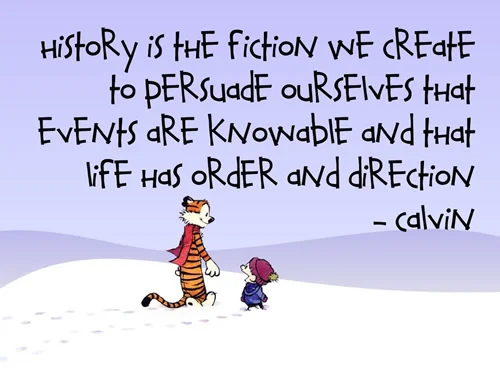
How and why does history get rewritten?
Historian Orlando Figes admits posting Amazon reviews that trashed rivals
Facts on the Start of the Cold War
“Study the historian before you study the facts. The facts are really not at all like fish in a supermarket. They are like fish swimming about in a vast ocean; and what the historian catches will depend, partly on chance, but mainly on what part of the ocean he chooses to fish in and what equipment he uses and, of course, what kind of fish he wants to catch. By and large, the historian will get the kind of facts he wants” - E.H. Carr
What is the connection between Ted´s view on facts, and our activity about Bella the Donkey?